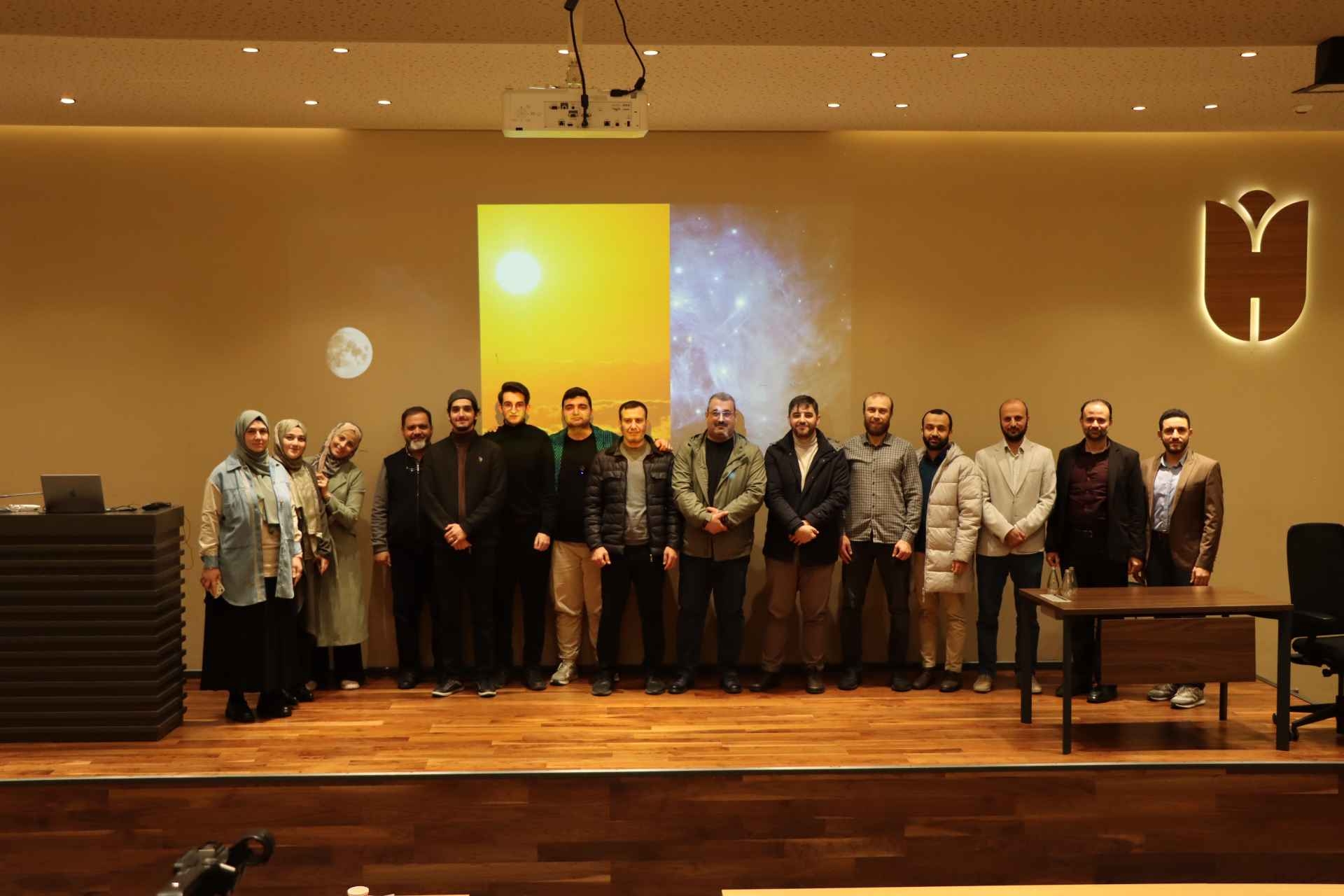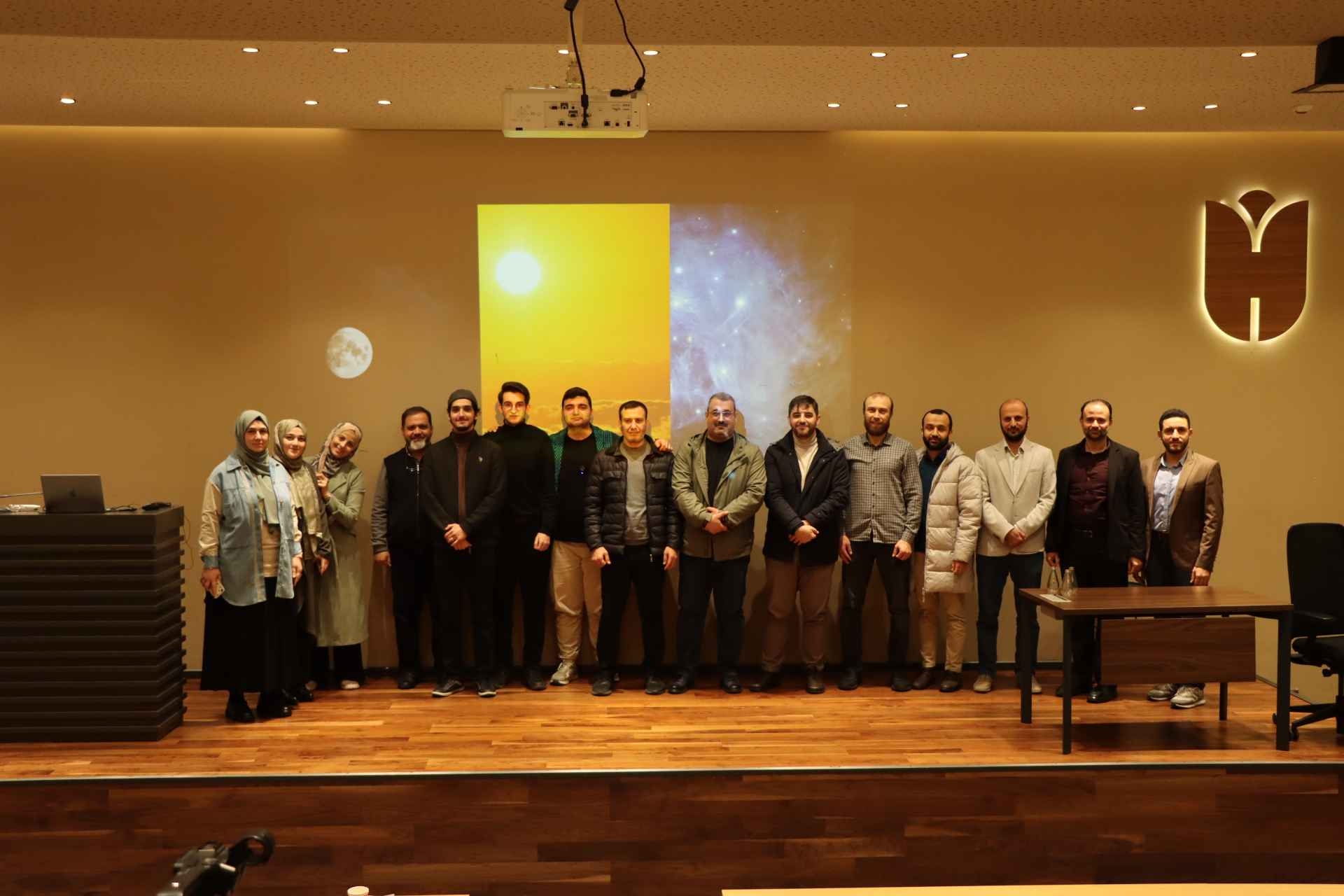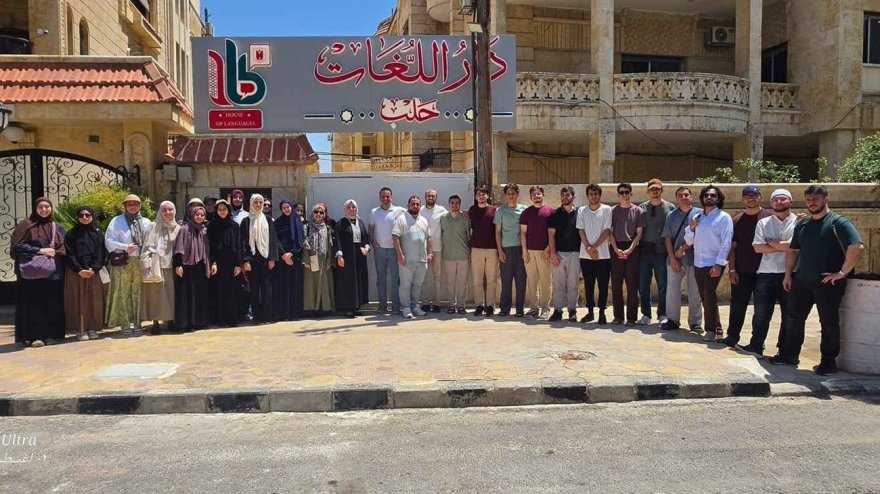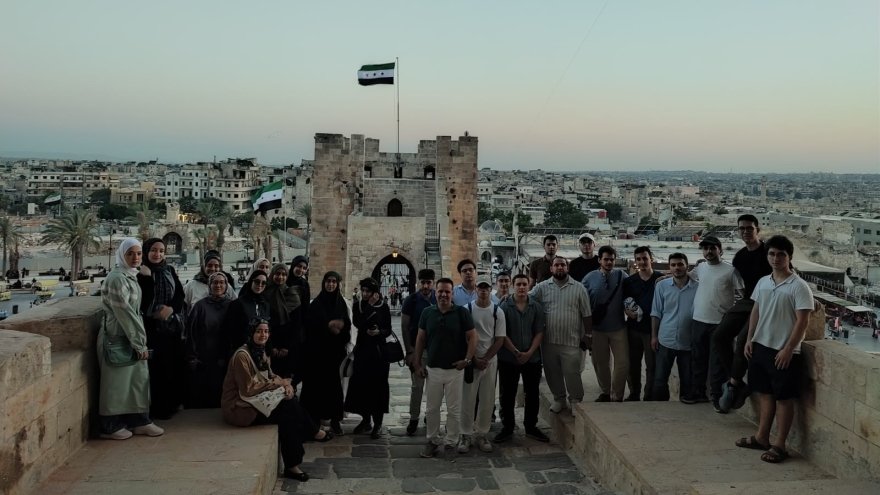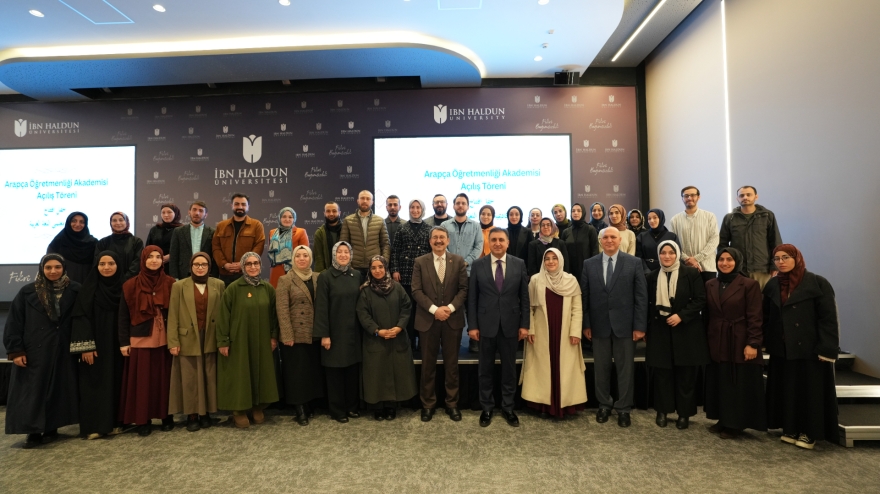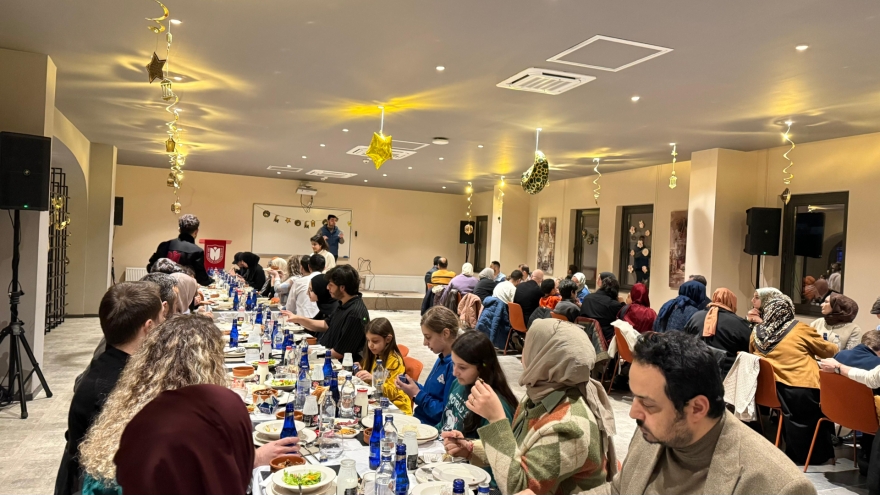
A one-month language camp organized by the School of Languages at Ibn Haldun University for students who successfully completed the Arabic Preparatory Program this year provided participants with the opportunity not only to enhance their language skills but also to gain first-hand experience of the Arab world. Designed to integrate academic instruction with field-based learning, the program offered students an intellectually enriching and memorable experience.
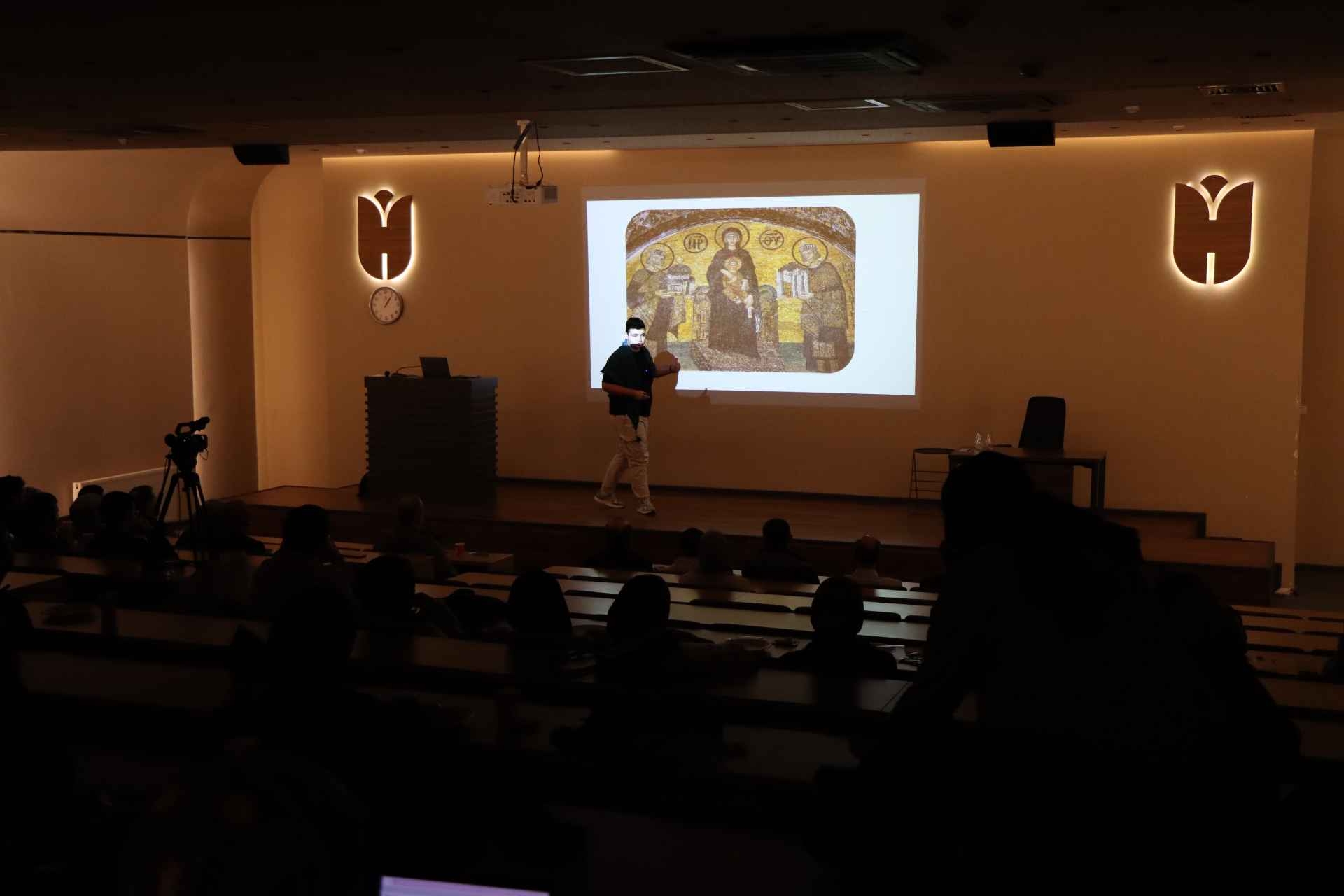
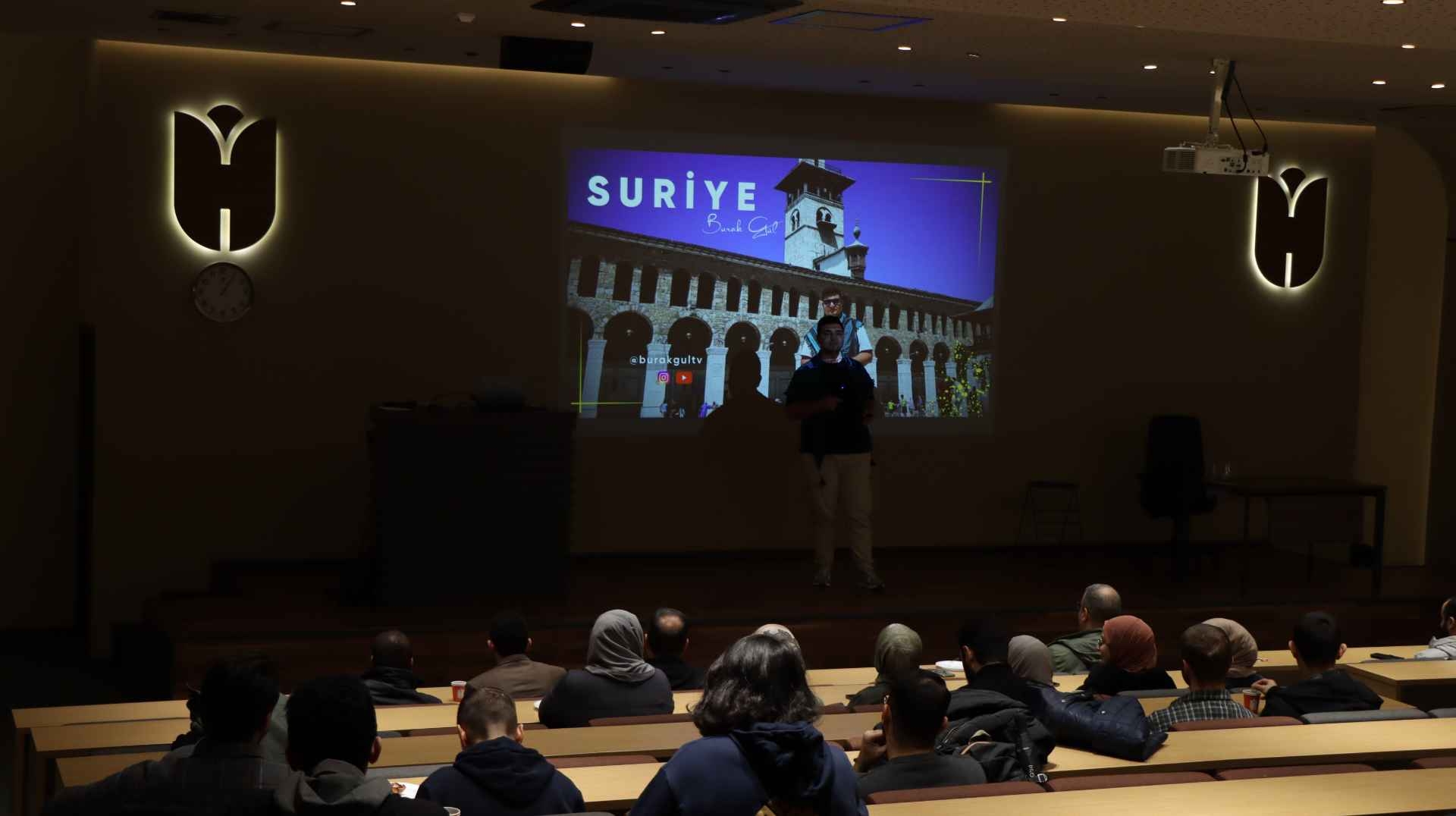
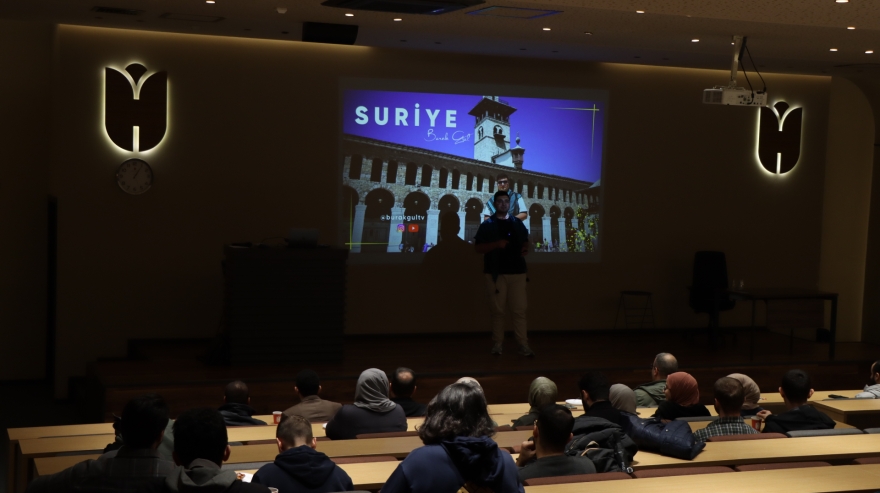
One of the students who participated in the language camp, Burak Gül, undertook extensive study visits to historically and culturally significant Syrian cities, including Damascus, Aleppo, and Homs. During these visits, Gül documented the region’s historical texture, cultural richness, and collective memory through numerous photographs. He later shared his observations and visual documentation with participants during a special program held at Ibn Haldun University.
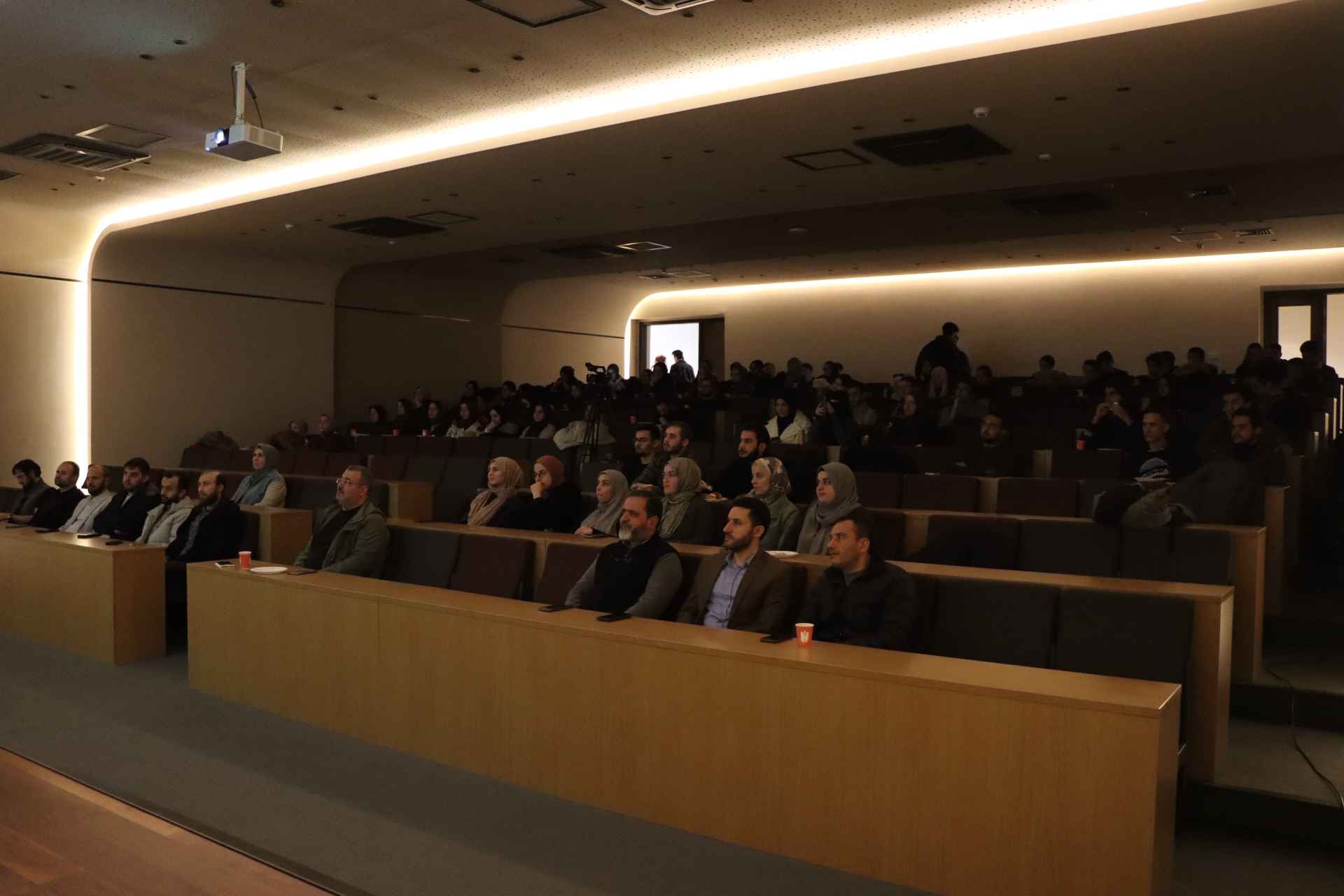
Titled “Syria Through Its Places,” the program presented Syria not merely as a geographical entity, but as a living space shaped by its history, people, collective memory, and lived experiences. Accompanied by his photographs, Gül addressed a wide range of themes, from the ancient streets of Damascus to Aleppo’s history marked by destruction and resilience, and from the multi-layered social fabric of Homs to everyday life in the region. The presentation offered participants a profound and authentic perspective on Syria.
In the final part of the program, particular attention was drawn to the Yarmouk Camp in Damascus. Burak Gül emphasized that Yarmouk is not merely a refugee camp, but a powerful symbol of war, forced displacement, and human suffering. He concluded his talk by highlighting the importance of the bonds of brotherhood established with the people of the region, ending with the reflective question: “Who are we, really?”
In line with the School of Languages’ educational approach, which integrates language instruction with cultural and humanitarian awareness, this program aimed to develop not only students’ linguistic competencies but also their historical consciousness, empathy, and intellectual perspectives. The “Syria Through Its Places” program was followed with great interest by participants and stands as a strong indication that similar initiatives will continue to expand within the university.